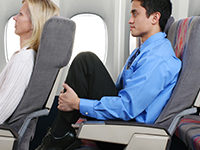
A four-hour flight may not seem all that long, but it can put travelers at risk of blood clots, also called deep vein thrombosis (DVT). In fact, any mode of travel that is four hours or longer – by car, bus, train or plane – puts travelers at risk of DVT.
DVT is a condition that is caused by a lack of movement. Sitting in a confined space with little room or opportunity to move and stretch the legs creates the potential for blood clots to form in the deep veins, which are not visible through the skin.
The longer travelers sit, the more likely they are to develop DVT, although the overall risk for most people is small. Most people who develop blood clots during long travel have another underlying risk factor, such as:
- Varicose veins
- History of previous blood clots
- Surgery within three months of traveling
- Use of contraceptives containing estrogen
- Use of hormone replacement therapy
- Pregnancy, or immediately post-partum
- Active cancer
Serious health problems can result if a blood clot breaks free and travels to the lungs causing a blockage in the lungs, also known as a pulmonary embolism.
Travelers can help protect themselves from developing blood clots by getting up once an hour for a short walk and stretching their legs during long periods of travel. Examples of simple stretches include pulling each knee up to the chest and holding for 15 seconds, then repeating 10 times. Another stretch is to flex the ankles and feet by “writing” cursive letters in the air with each foot.
All travelers should drink plenty of water and avoid or decrease consumption of beverages that can cause dehydration, such as alcohol, coffee and caffeinated sodas. People who are at higher risk for blood clots also may want to wear compression socks during travel; you should consult your doctor.
Although many people who develop DVT show no symptoms, common signs to look for include:
- Redness of the skin
- Swelling of the arms or legs
- Unexplained rash
- Unexplained pain or tenderness
Similarly, a pulmonary embolism (PE) can have no symptoms. However, the common signs of a PE can be frightening. They include:
- Difficulty breathing
- Chest pain
- Rapid or irregular heartbeat
- Coughing up blood
- Fainting or light-headedness
If You Need Commercial Medical Transportation after DVT or PE
Travelers who experience symptoms of DVT or a PE should seek medical help immediately.
SentinelMED provides commercial medical transportation, medical repatriation, and medical escort services to help navigate the complexities of long-distance travel for sick or elderly patients.
The SentinelMED team can arrange door-to-door care and transportation from discharge at a hospital or medical facility to a receiving health care facility or family member who is able to assume their care. For patients who do not have a family member or friend to travel with them, a medical escort can make it possible to arrive home safely and in comfort.
The SentinelMED team understands the complexity of delivering exceptional care to patients who need assistance during travel. Please contact us to learn more about the services that SentinelMED offers or its staff.